Subworkflows
A complex, cross-functional case study demonstrating my leadership to drive meaningful change across multiple business lines—improving the consumer experience and evolving Blend’s configurable platform.
Why now?
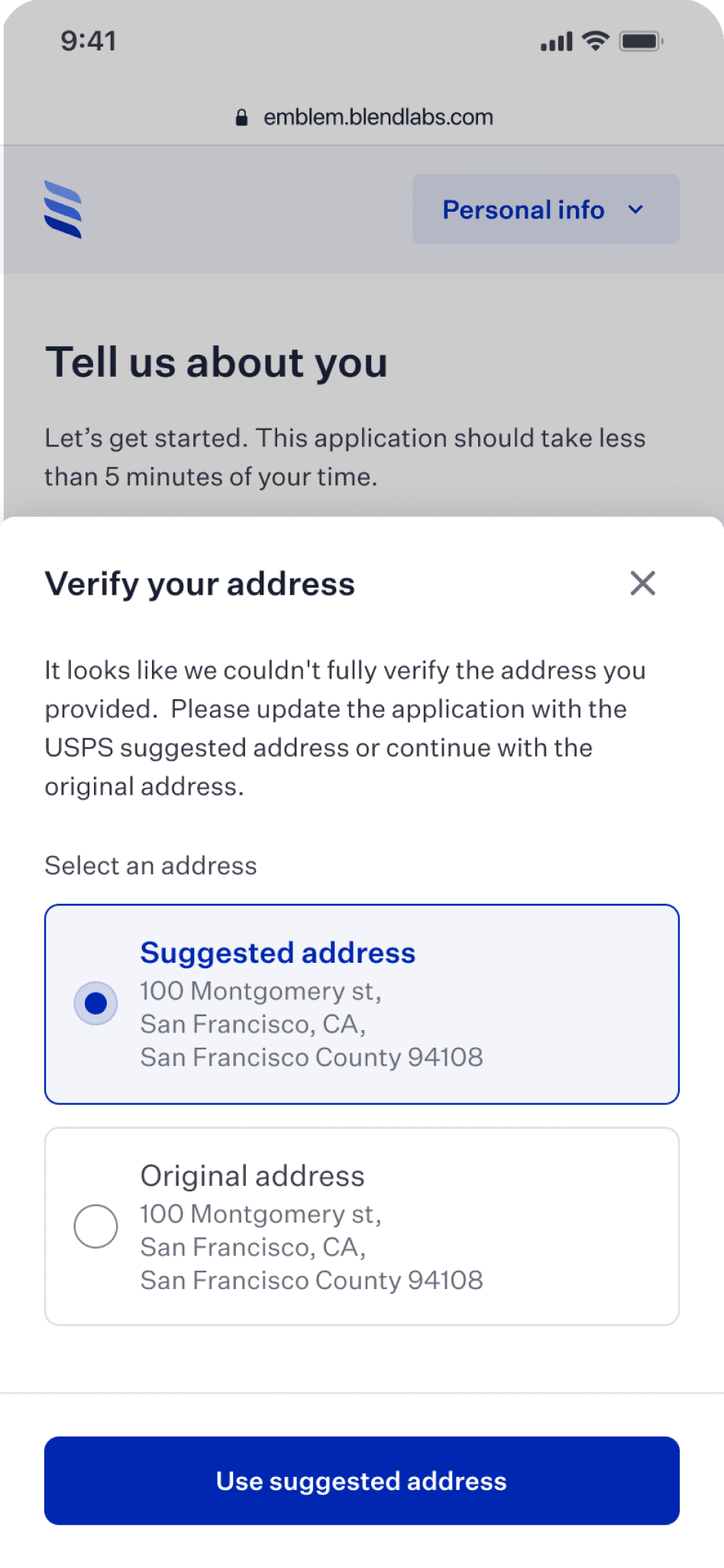
While designing our consumer experiences, we identified a need to streamline tasks such as document uploads and address confirmations. Recognizing that the consumer experience is closely tied to our platform's capabilities, my team explored solutions that spanned both consumer and enterprise domains. This cross-functional approach ensured a cohesive and efficient user experience across business lines.
The Problems
Since this initiative spanned two product lines, there were multiple problems to solve including:
1. How can we enable users to complete a task more seamlessly during an application journey? (Consumer)
2. How can we build modals into new an existing workflows so that users can trigger tasks throughout? (Builder)
My Role
I played a key role in orchestrating cross-functional alignment and securing resourcing across multiple product lines and teams, ensuring that efforts across design, product, and engineering were strategically coordinated. Throughout the process, I provided design direction and mentorship, guiding the work from early exploration through to implementation.
Existing Consumer Experience
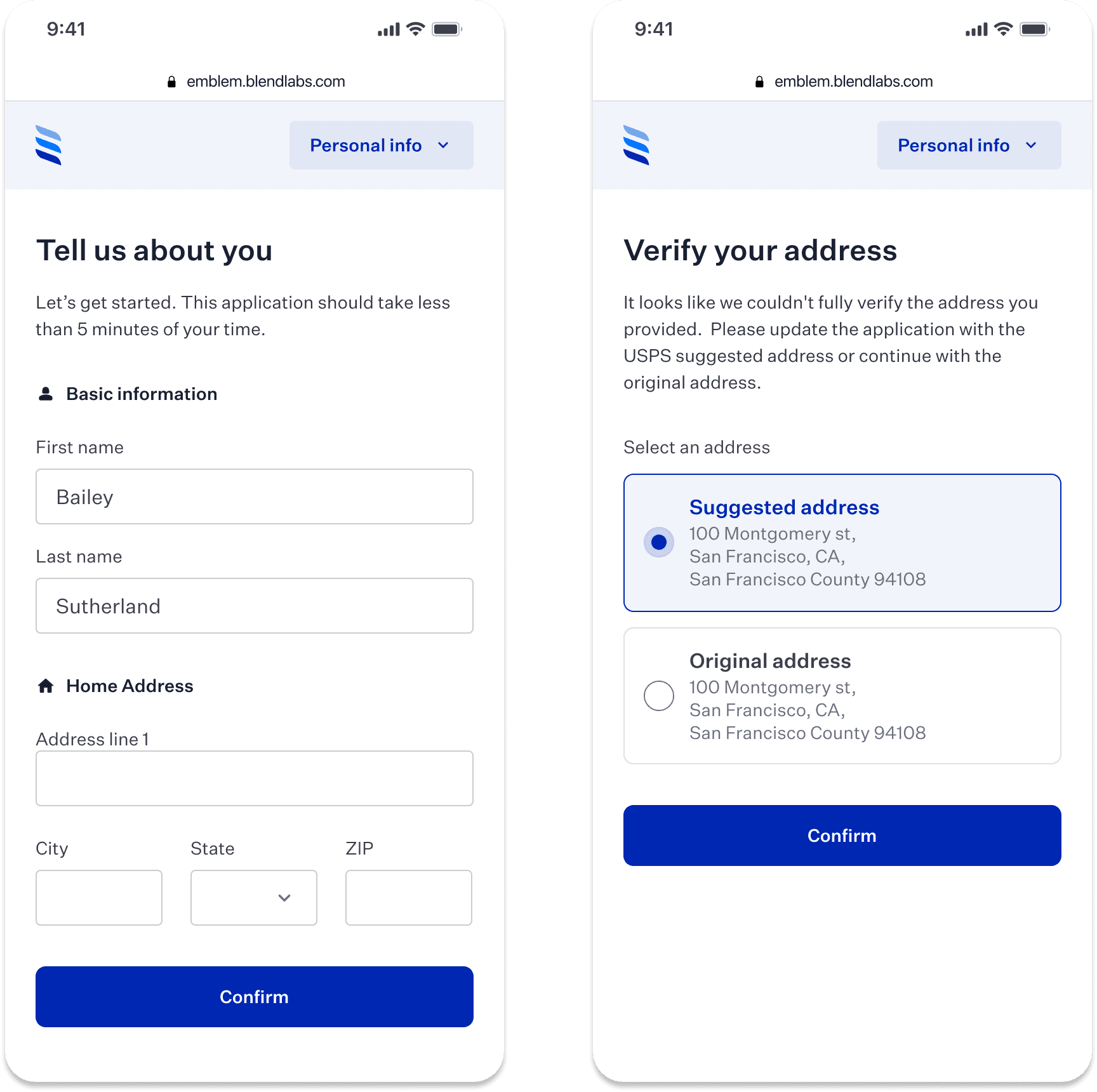
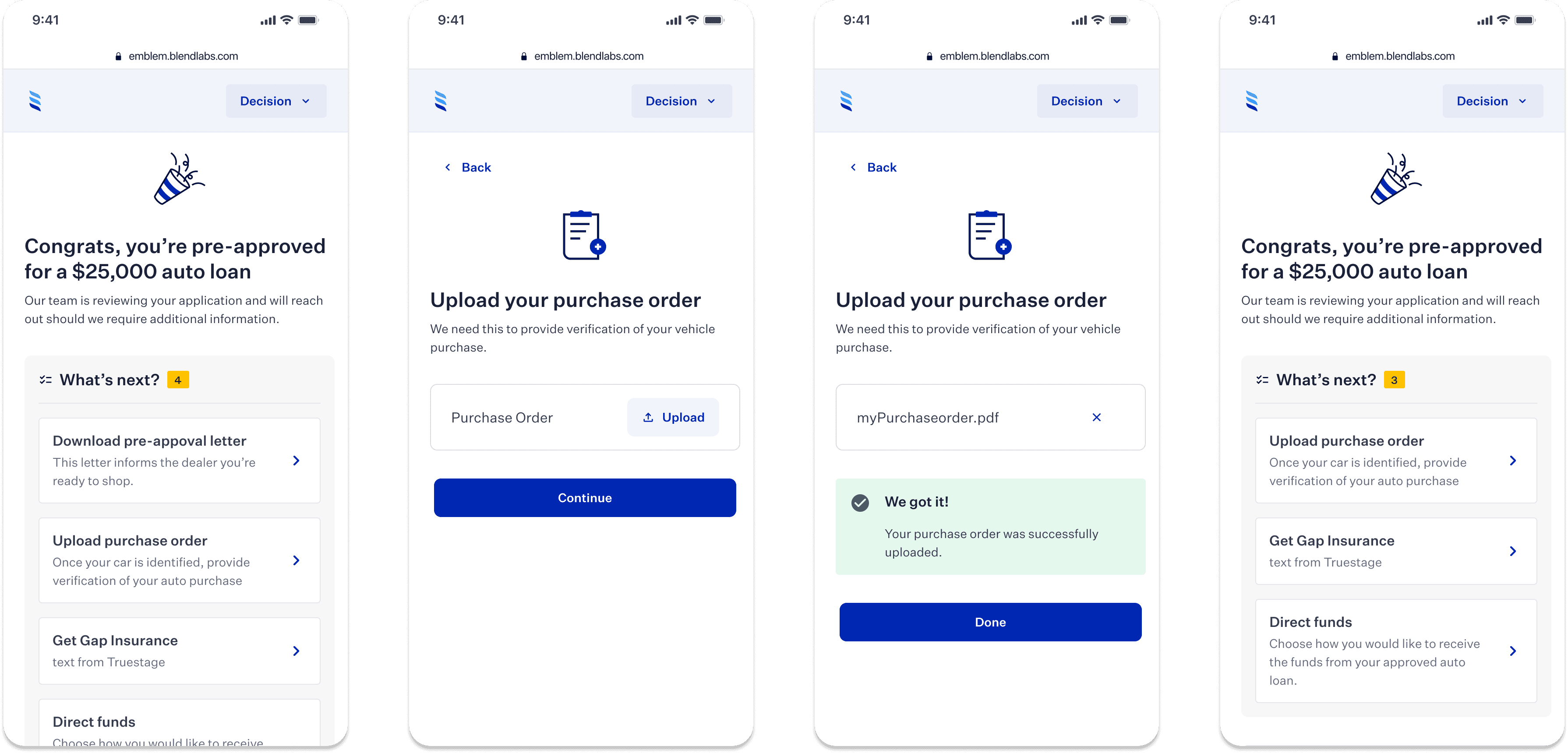
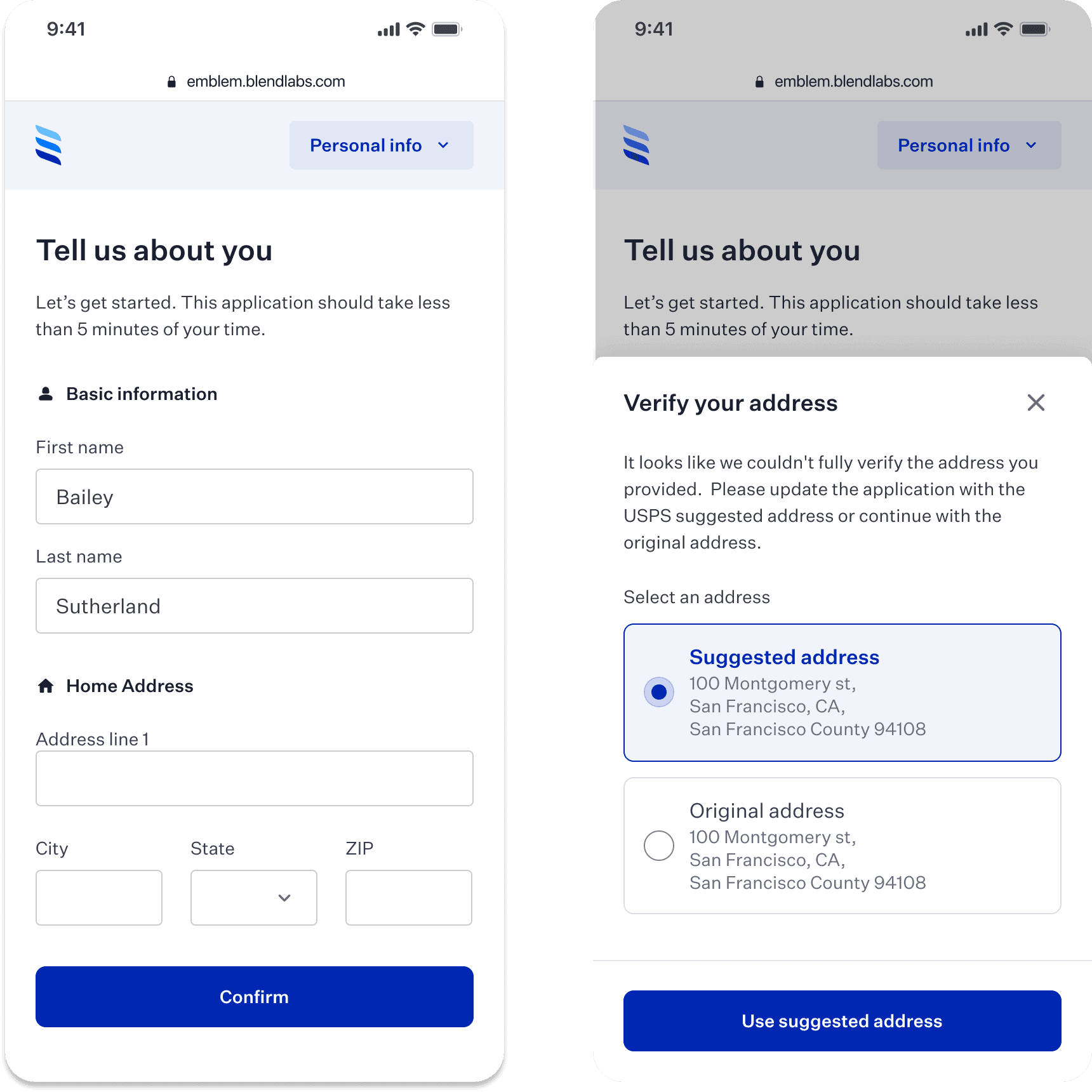
Here are a few examples of the full-page experiences required to complete a simple task such as entering debit card details or confirming your address.
USPS Verification
As a part of the application we run USPS verification to confirm the home address. An applicant may enter the address differently, such as Drive instead of DR, which triggers an address confirmation task.
Upload a purchase order
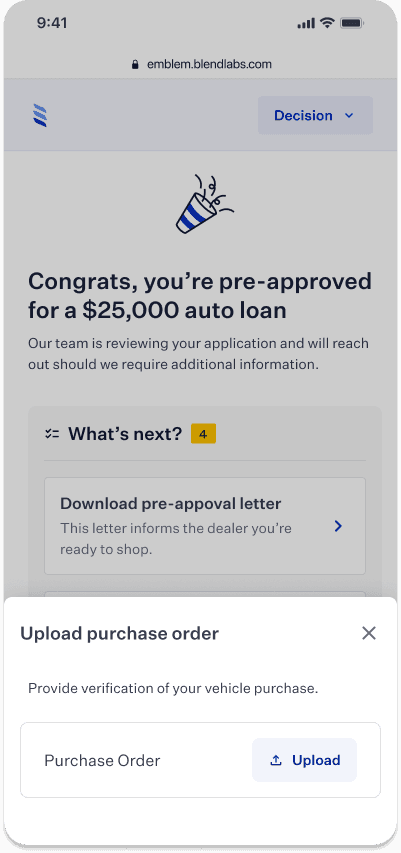
During an auto loan application we require several tasks once the application is submitted. For instance, they must upload a purchase order for loan verification.
A note about the platform
Now, before diving into the solution exploration, it’s important to note that a new component for the consumer banking applicant experience also requires an update to platform functionality.
What is the platform?
The configurable end-to-end solution that streamlines and powers consumer banking workflows.
How do we make improvements?
To make platform improvements there are several stakeholders and steps since its spans several business lines.
Align stakeholders
Since the feature request touched the platform and consumer banking teams, we pitched the idea to the platform and consumer banking teams to understand appetite
Define Scope
The first step is to identify the change and breakdown its impact. Is this an update to the workflow builder, form builder, or component system?
Define resourcing
If an update touches the component library (like this one) there are resource impacts across consumer banking and platform that must be aligned on.
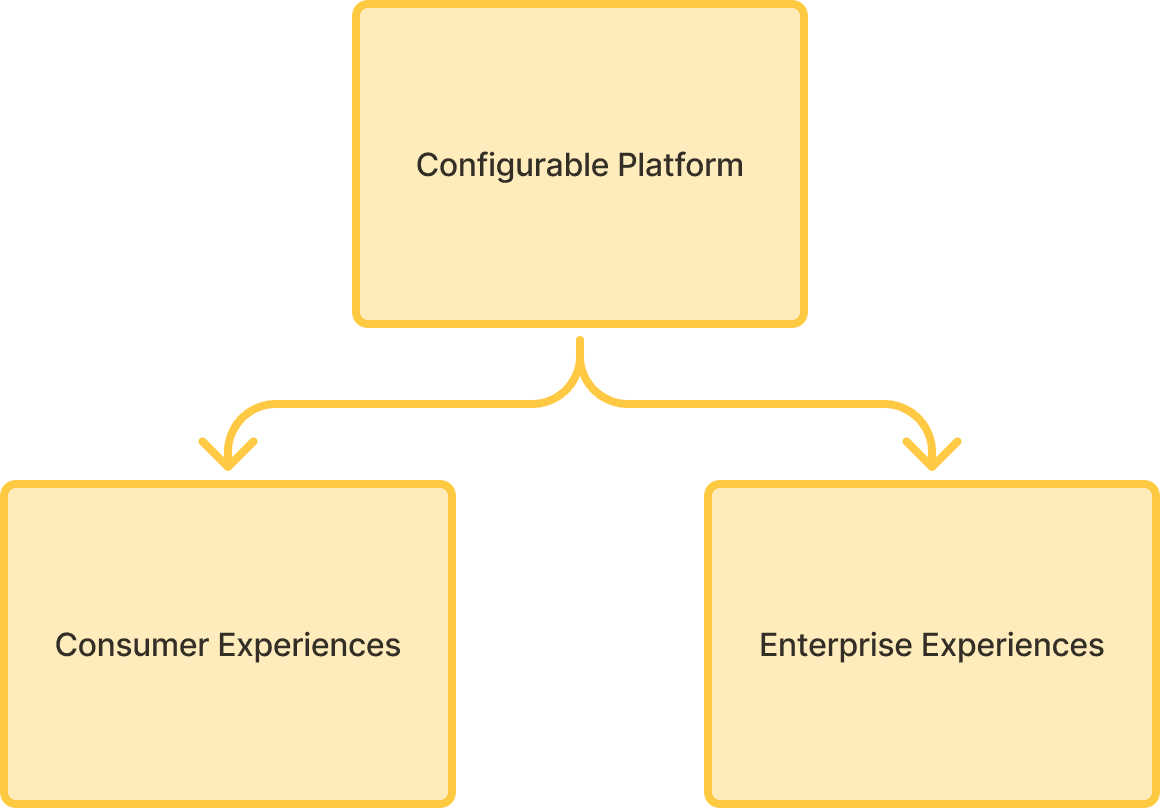
Design Execution
Through brainstorming we determined a modal was the solution we sought since it’s a globally recognized pattern for task completion. The team crafted a scalable, responsive modal design for desktop and mobile.
The Consumer Experience
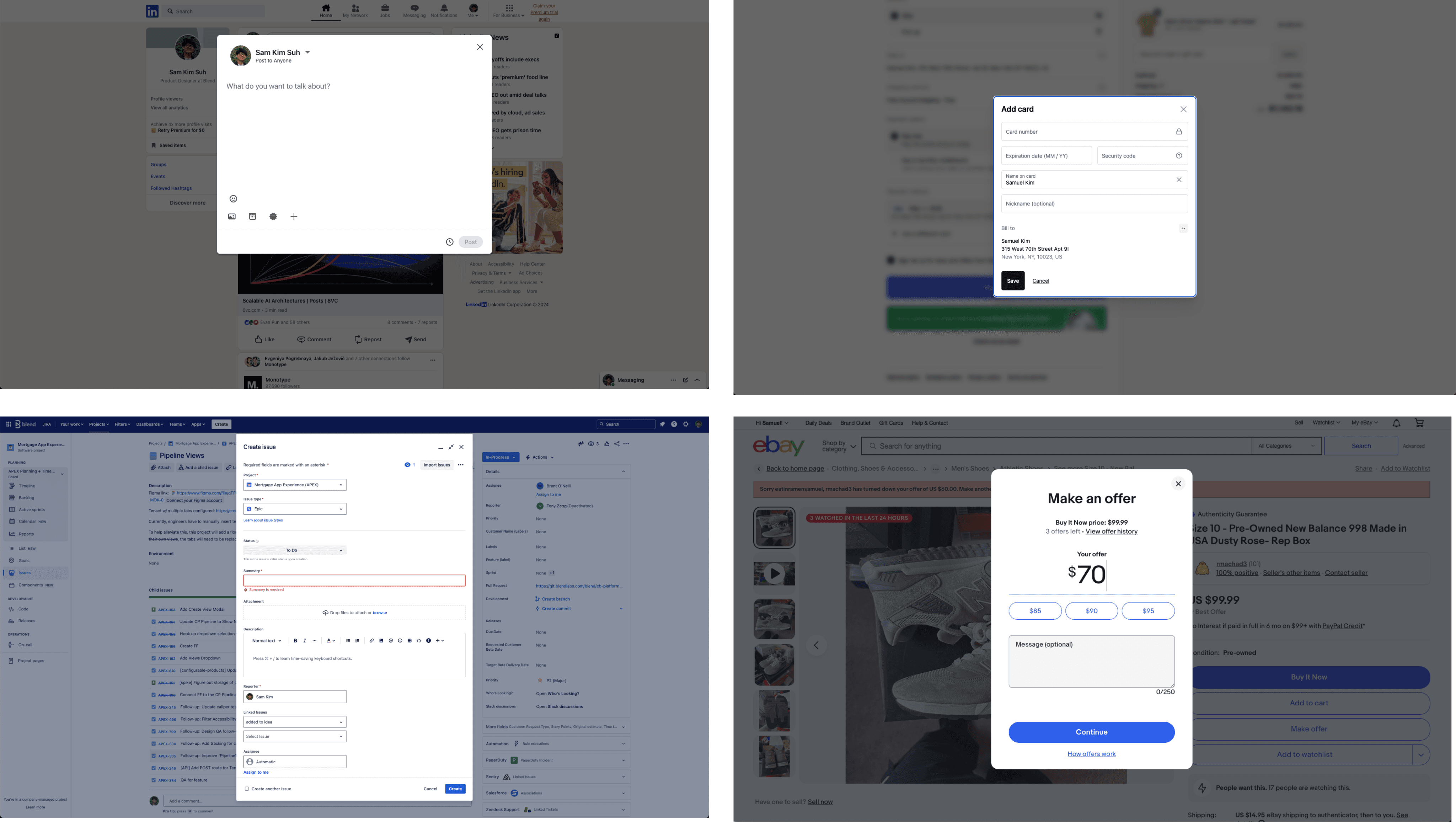
Discovery examples
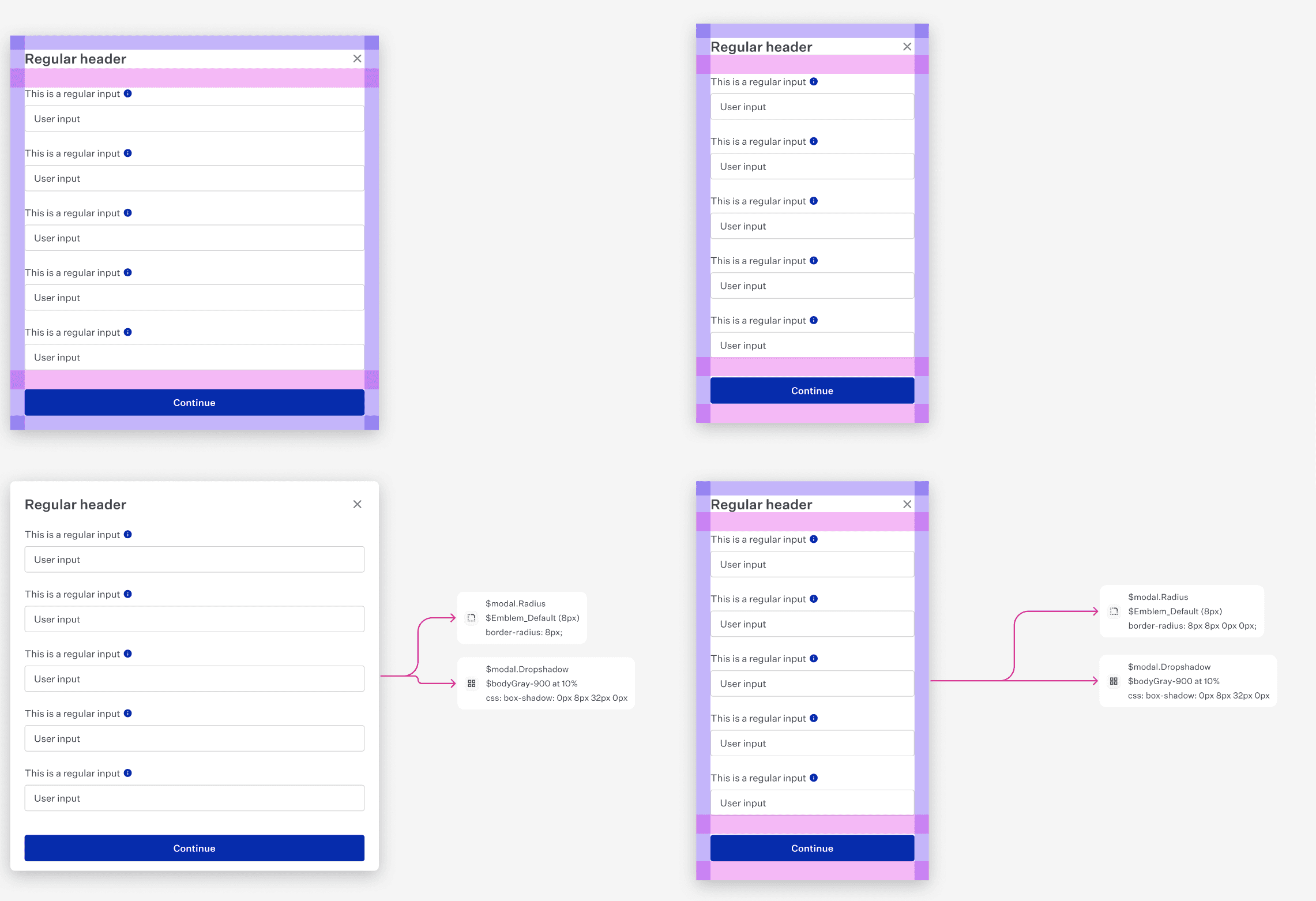
Consumer modal spec
Consumer modal design
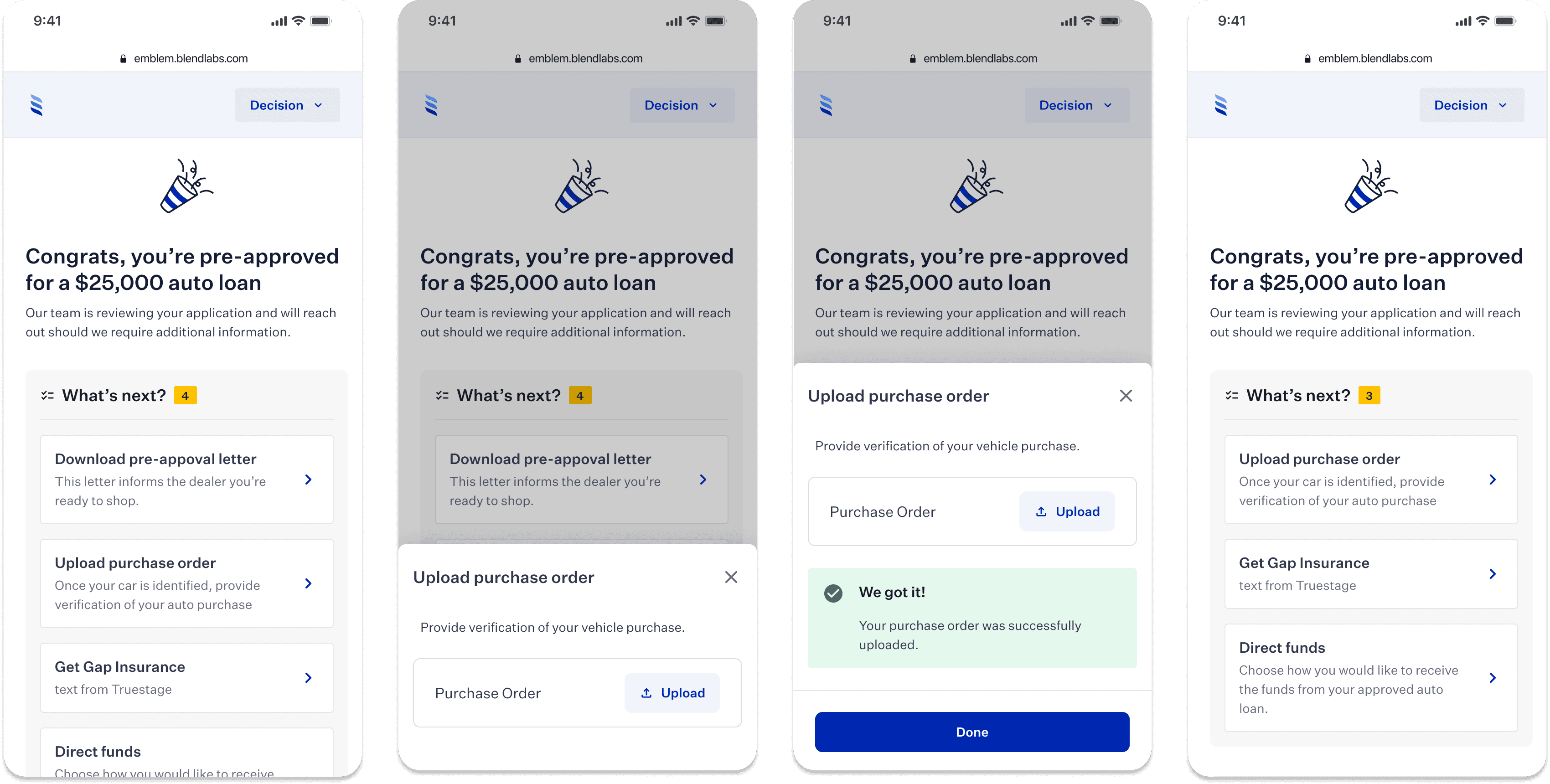
Consumer modal design
The Enterprise (Blend Builder) Experience
Approach
During stakeholder alignment we agree to prioritize resourcing to the consumer experience. This meant we needed a lean solution for the platform experience. My platform design team began exploring potential solutions, but quickly realized our existing loop node workflow could solve our problem.
What’s a loop node?
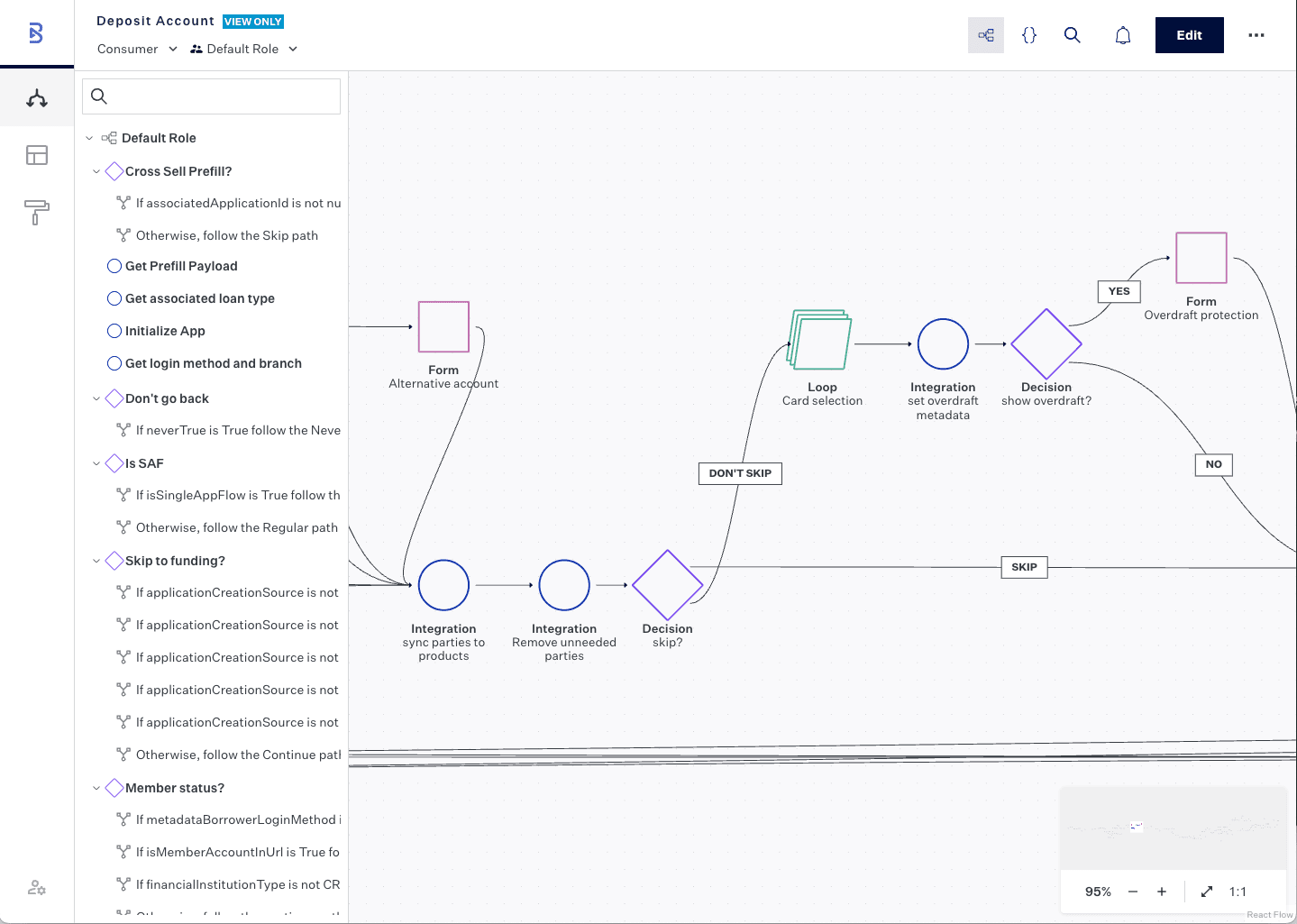
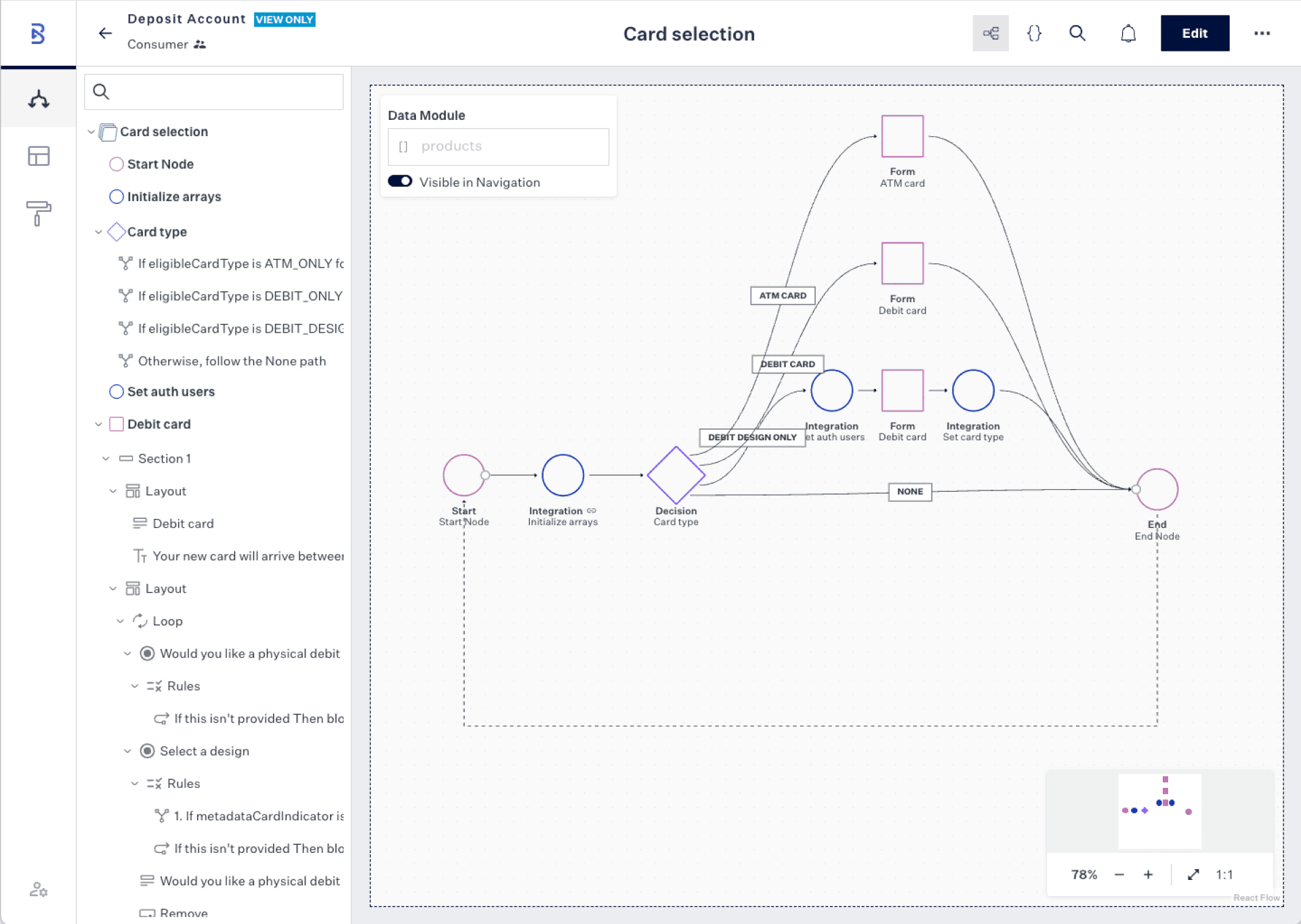
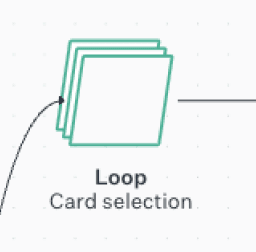
A loop node is a short, repeatable (hence loop :) workflow connected to a larger workflow. See the image below for an example of a loop on the canvas.
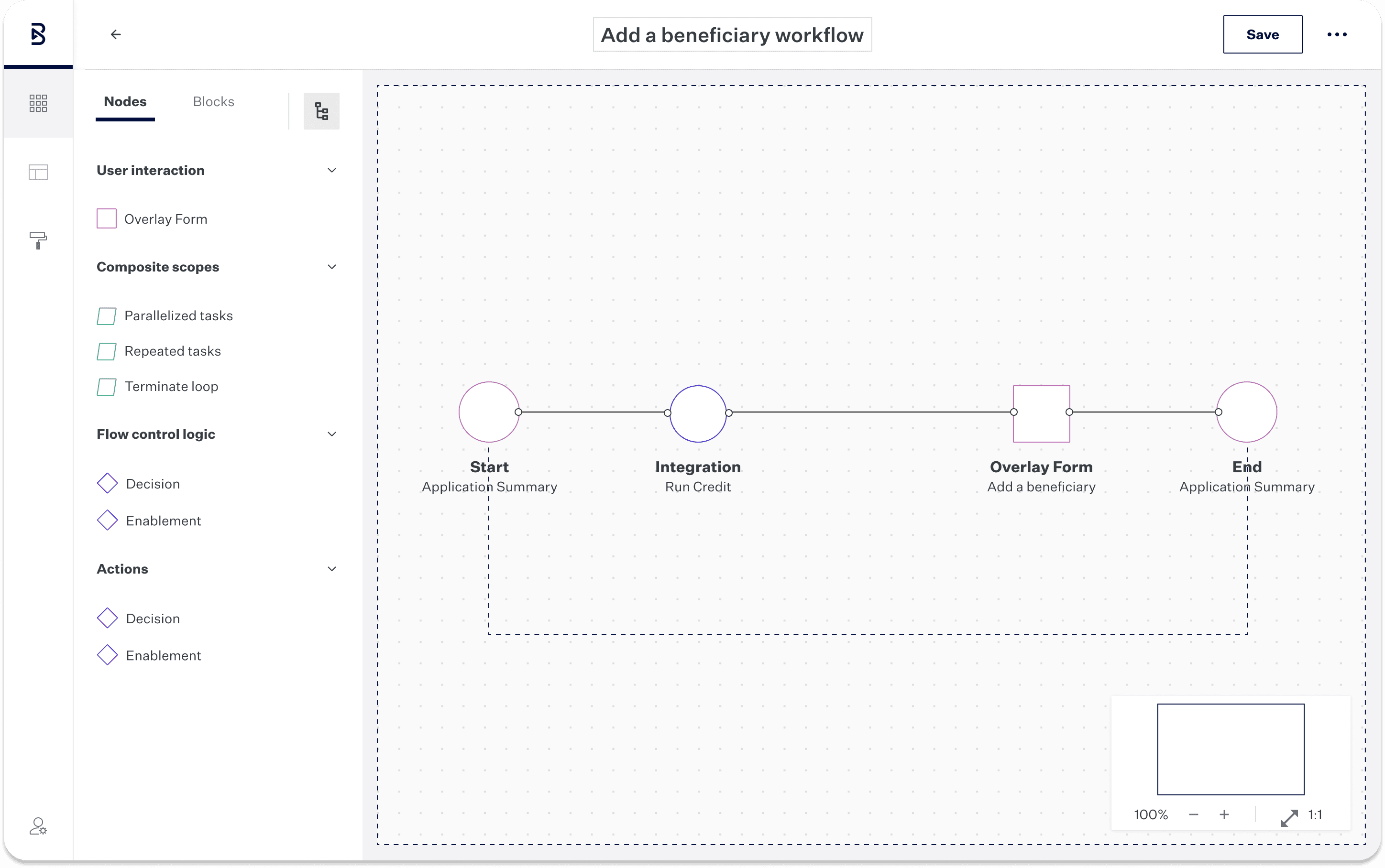
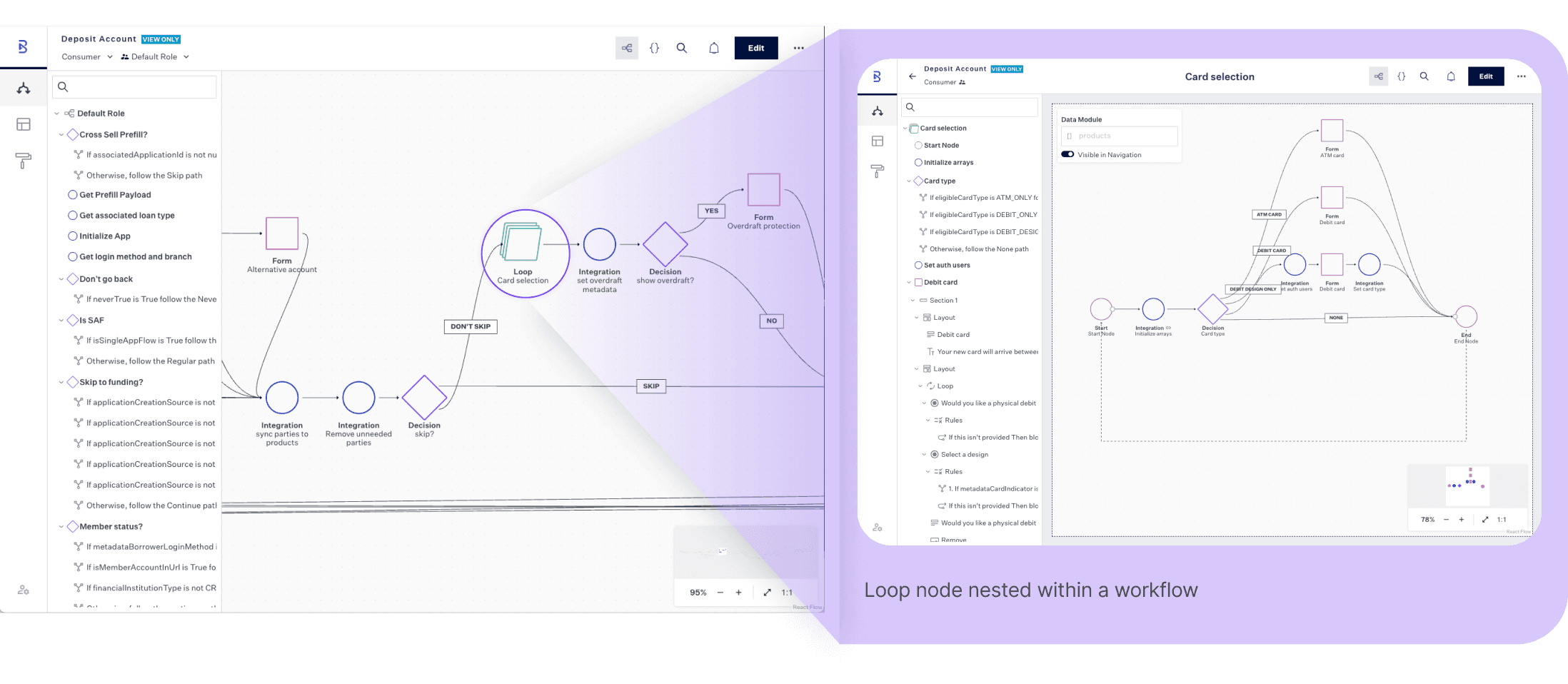
Here’s an example of a workflow with a loop node. As you can see the Card selection workflow is nested within the larger experience. Once the team aligned on reusing existing functionality, my team explored visual cues to convey the differences between loop nodes and sub-workflows, the naming for the new feature.
One loop to rule them all?
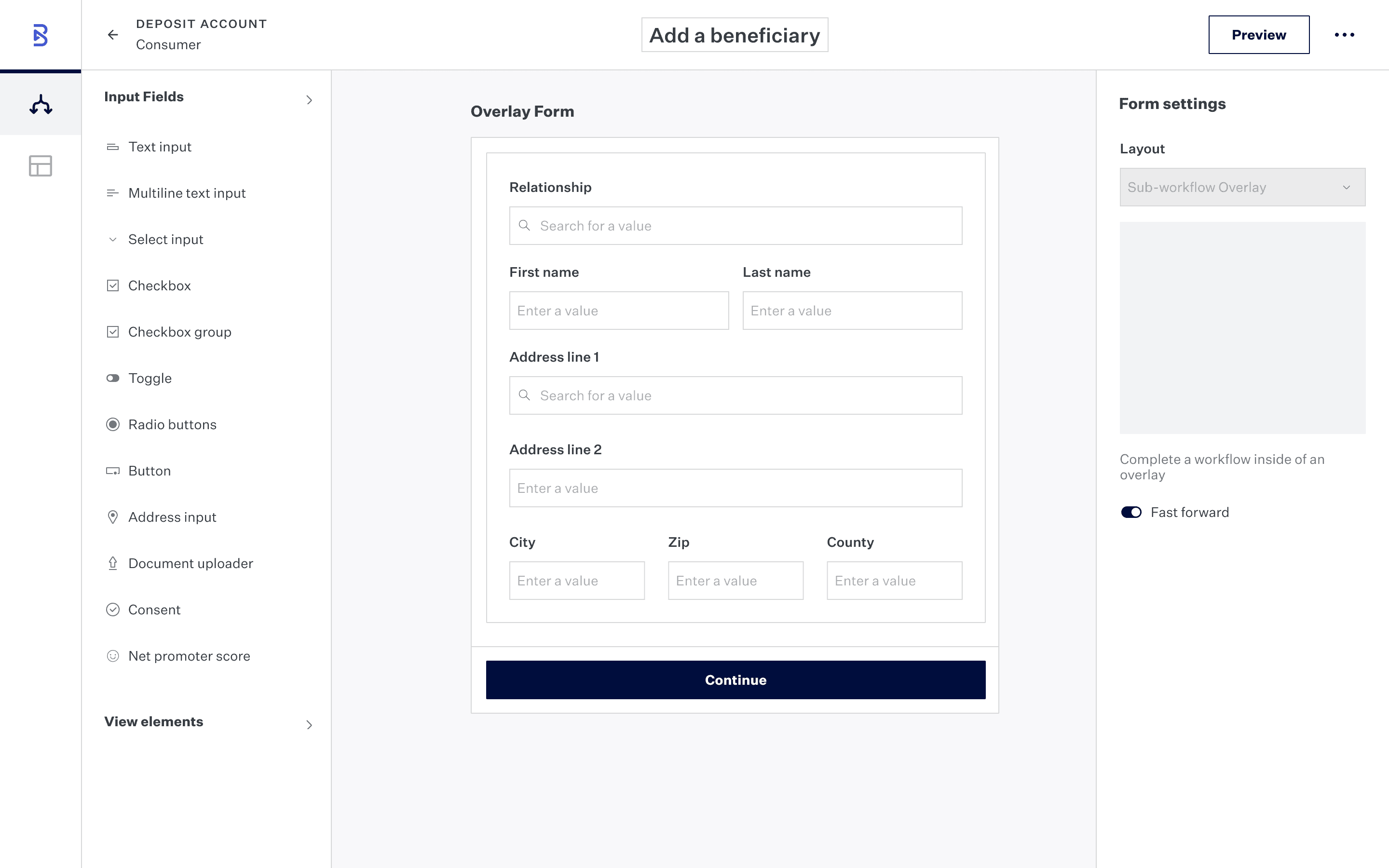
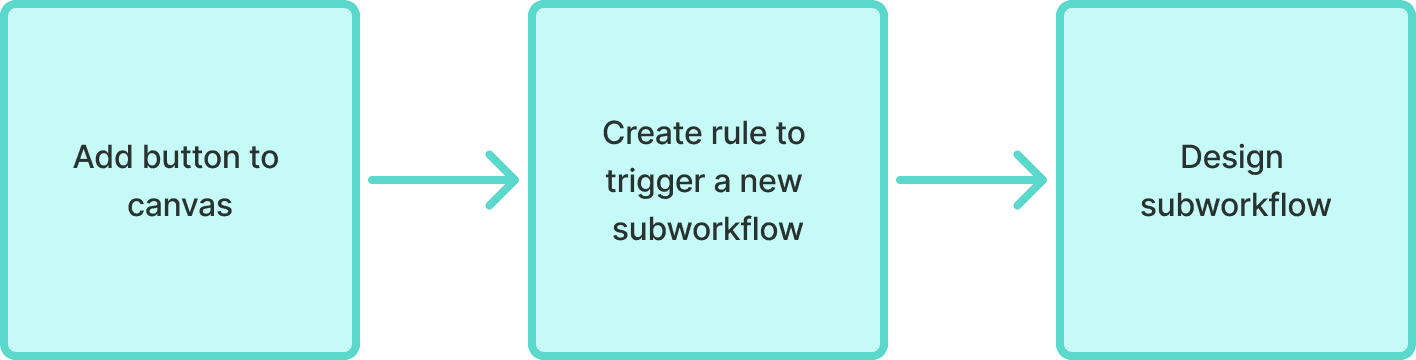
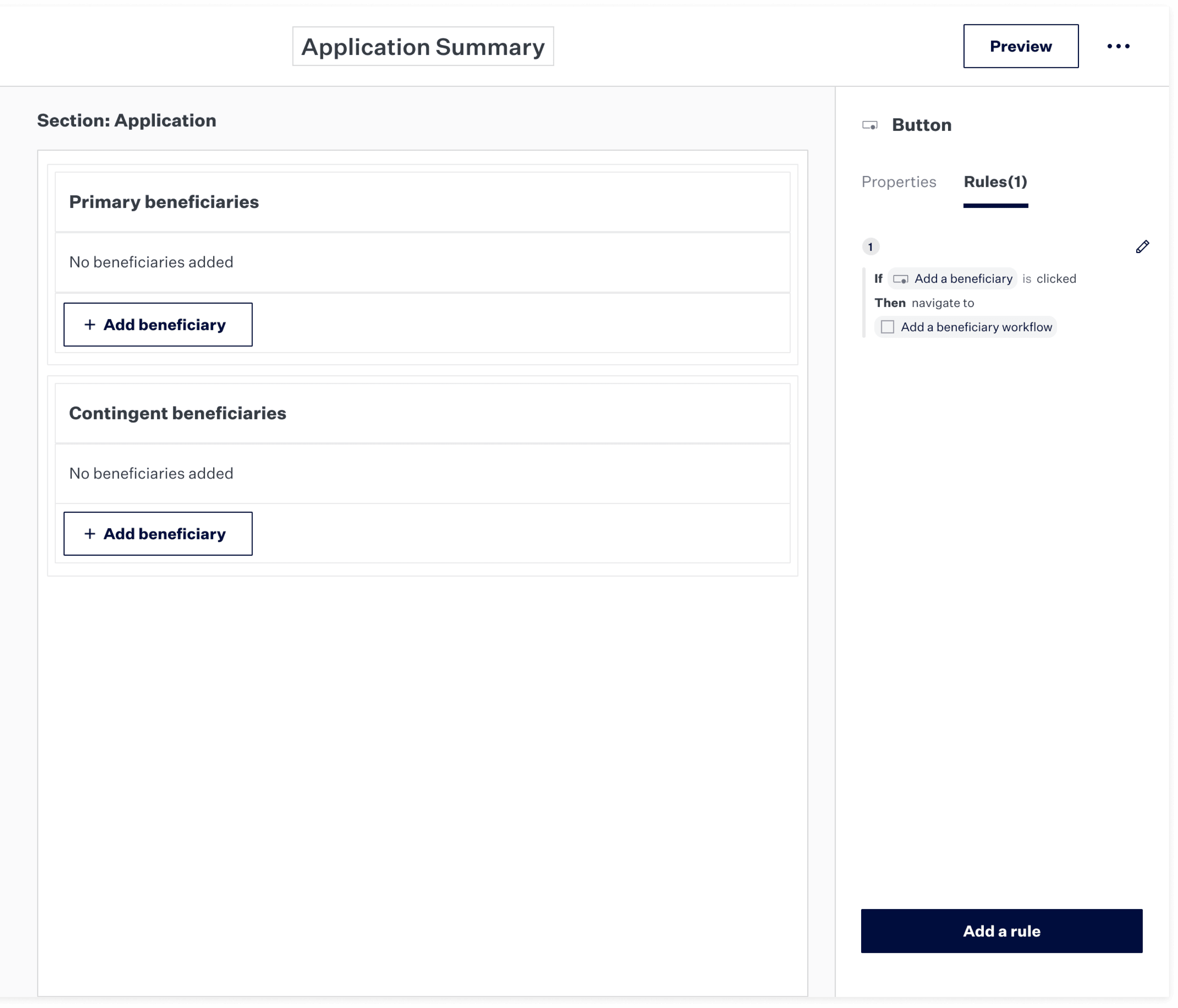
During discussions the team realized that, while the loop node solves the workflow problem, it would require a different trigger since it’s nested one level deeper. The team designed the entry point for the sub-workflow at the point of trigger, Rules.
Application workflow
Loop node workflow
Sub-workflow
Workflow hierarchy
Results & Reflections
This effort reinforced the importance of strong cross-functional relationships in driving meaningful change across teams and product surfaces. A few key takeaways emerged:
Scrappiness and speed can create real momentum—even when the solution isn’t perfect, progress matters.
Business impact isn’t always tied to a single metric; sometimes, the value lies in unblocking teams or improving the system as a whole.
Clear, consistent communication is critical when navigating complex initiatives that span multiple teams and stakeholders.
Deposit Account Opening
Blend,
March 2024
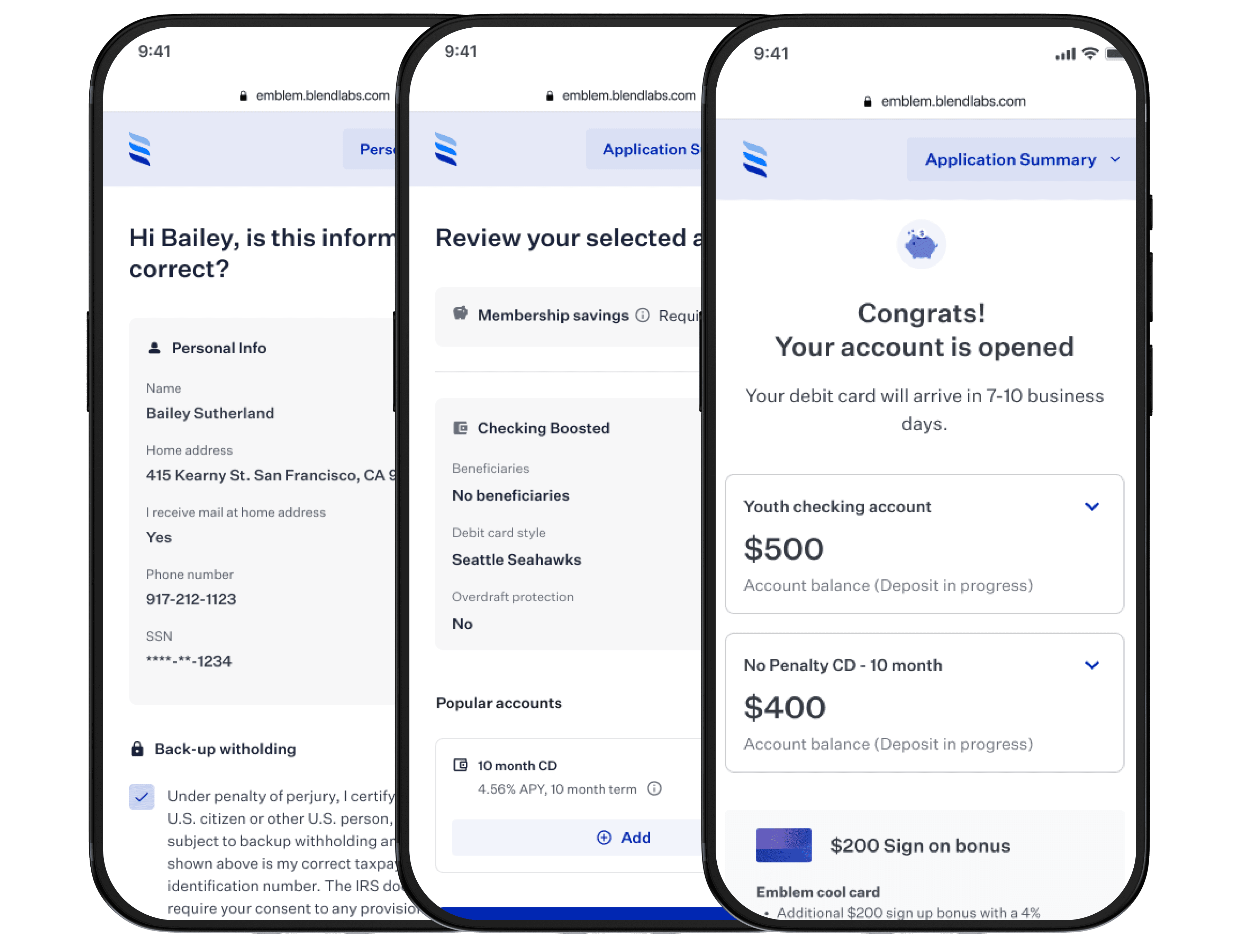
I spearheaded a collaborative overhaul of Blend's deposit account opening product for enhanced efficiency and user experience that led to an 89% increase in funding conversion.
The Creation of Subworkflows
Blend,
June 2024
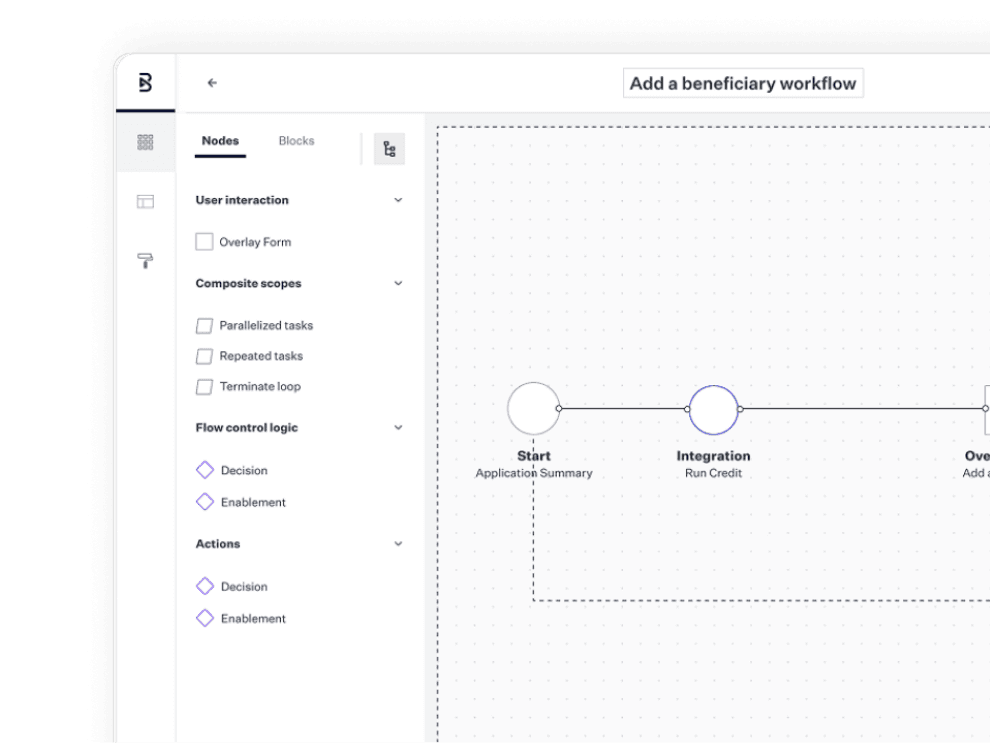
A complex, cross-functional case study showing how I led design efforts to drive meaningful change across multiple business lines—improving the consumer experience and evolving Blend’s configurable platform.
Product Account Selection
Blend,
January 2025
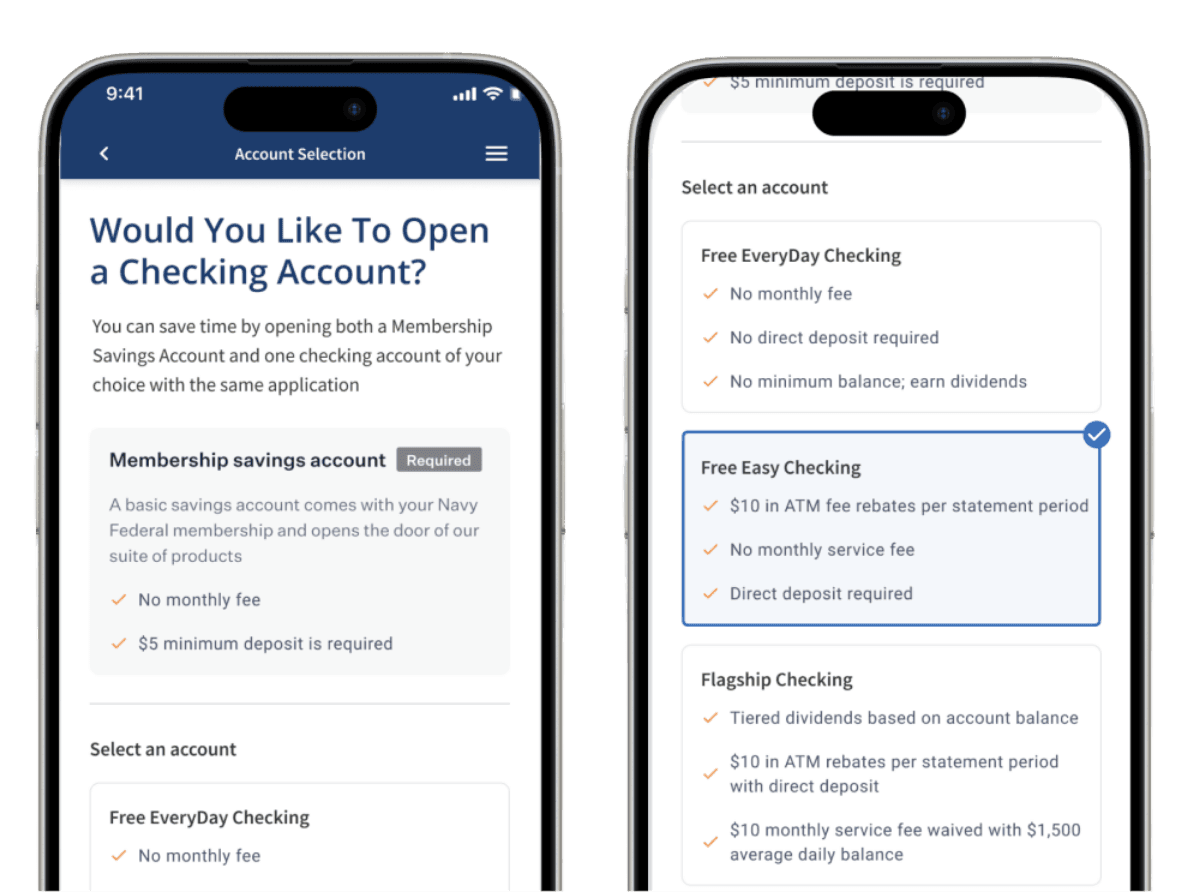
I designed an iterative improvement the account selection flow that led to an increase accounts booked per application.